Reimagining Resy: Designing an Accessible Dining Experience on Resy for Wheelchair Users
TEAM
Karla Santamaria
Matthew Thien
Rutuja Nagulpelli
Krishna Kishore Lal
DURATION
Sep 2024 - Nov 2024
TOOLS USED
Sep 2024 - November 2024
MY ROLE
User research, ethnographic research, data analysis, wireframes, prototypes
CONTEXT
Resy is a global reservation platform for users to discover and book reservations at restaurants. It is also a platform for Resy partner restaurants to take care of their reservation operations. We found that Resy's website doesn't include or mention any details about accessibility accommodations, thereby failing to cater to wheelchair users. For this project, we redesigned Resy to expand its audience to cater to wheelchair users and provide them with information to aid them in making more informed choices in selecting restaurants to dine at.
WHY CARE ABOUT ACCESSIBILITY?
The CDC estimates that about 12.2% of adults in the United States have some form of a mobility disability. As populations to continue to age, it’s especially imperative to think about accessibility of spaces. Restaurants are spaces of gathering where accessibility is certainly a crucial consideration.
Our Timeline
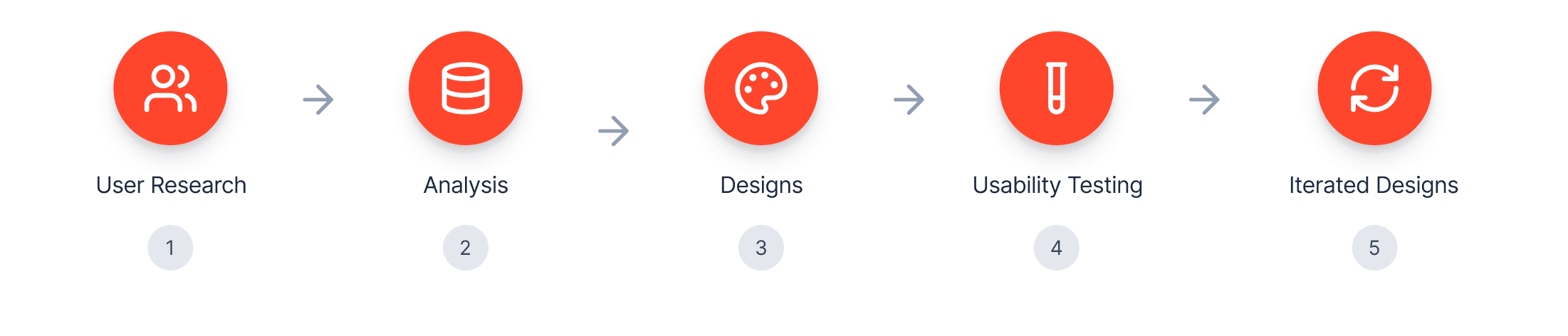
Our Research Process
We gathered secondary research, learning about the Americans with Disabilities Act (ADA) and primary research, interviewing wheelchair users, to inform our design
User Interviews
We conducted semi-structured interviews with:
4 wheelchair users
1 disability expert, both whose parents are wheelchair users
Contextual Inquiries
We also conducted a contextual inquiry in the space of an accessible restaurant, interviewing a restaurant manager to understand how they cater to wheelchair users
Observations
We visited different restaurants, observing them to attempt to understand what makes a space accessible or not:
2 restaurants rated as accessible
2 restaurants rated as not accessible
Synthesis and Data Analysis
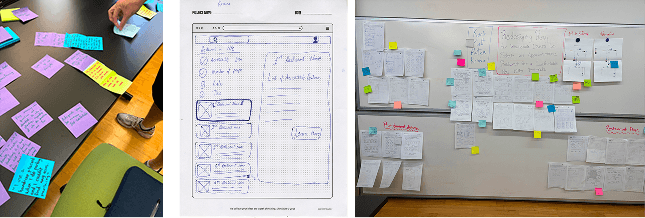
With the data we collected, we created an affinity map, charted out the user's mental model and then started brainstormed designs, sketching low-fidelity wireframes
Here's what we found
Resy doesn't mention accessibility at all
Resy doesn't mention anything about wheelchair accessibility on its website, not even a categorization of accessible restaurants.
“But having more specific accessibility requirements listed online would be very helpful determining what you need to bring out”
The "Accessible Restaurant" label isn't enough
Users like to know about what makes the restaurant accessible and the kinds of accessibility accommodations present, such as the parking, bathroom facilities etc.
“I wish it was more common to be able to find exactly which accessibility features a restaurant had such as tables to accommodate a wheelchair…or wider aisles."
Visual aids for accessible features are crucial
Listing accessibility accommodations won't suffice. It's important to aid users in visualizing this information and being as detailed and transparent as possible.
“I try to get to the website or to the Instagram site, and then try to look at the entrance.”
Closing the feedback loop
It's important to close the loop and ensure that restaurants also receive feedback on their accessibility accommodations.
“I actually used to really like looking for new things to eat and it has become a struggle at this point”
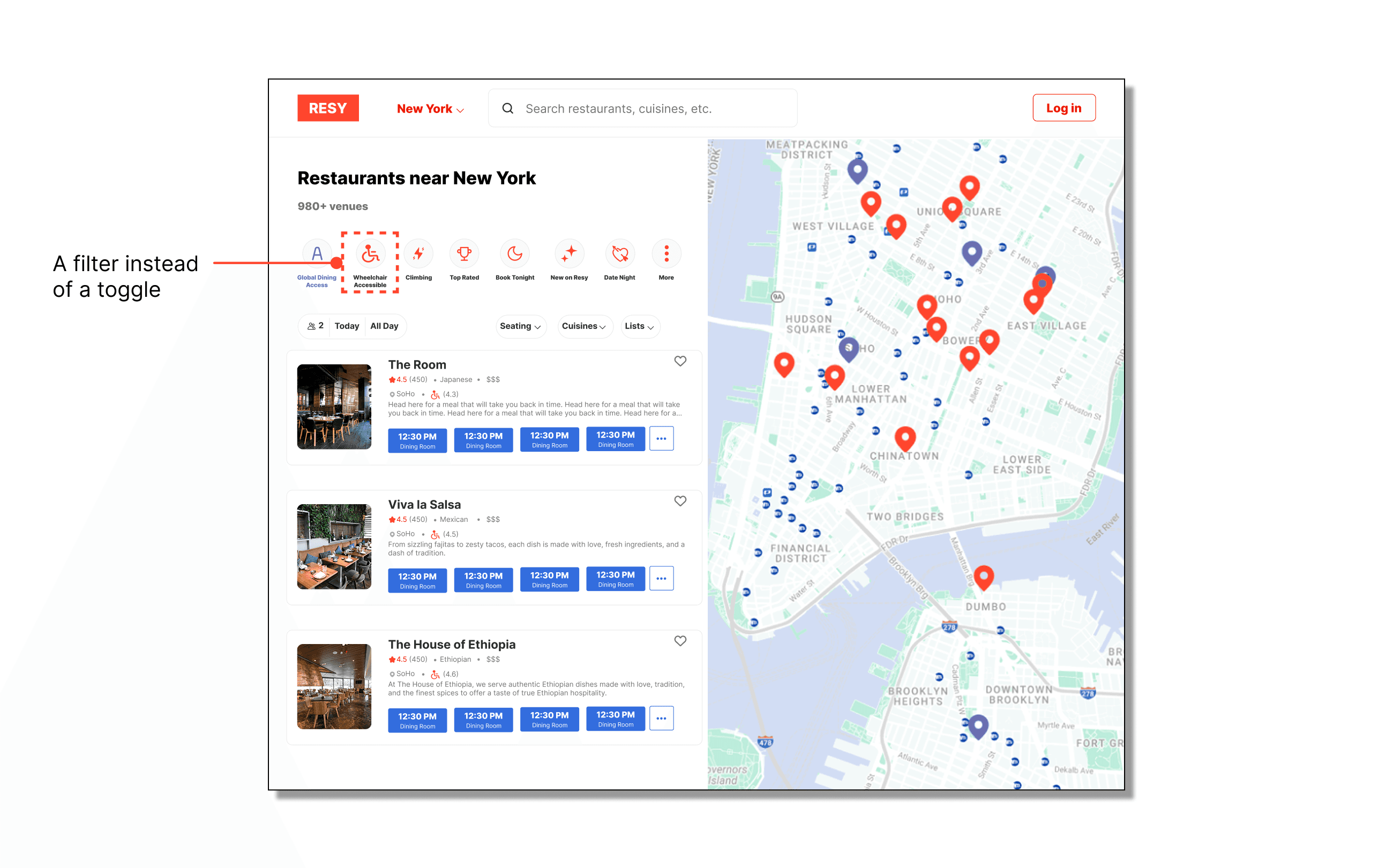
First, we suggest a categorization to indicate whether a restaurant is accessible or not
A categorization is the first layer to helping users find accessible restaurants
We initially proposed a toggle so users can get into "Wheelchair Accessible Mode" to see accessible restaurants, but through usability testing we found that a filter is easier to use and far more intuitive
We propose a filter so that users can not only search for the cuisine and other things they want, but also search for wheelchair accessible restaurants
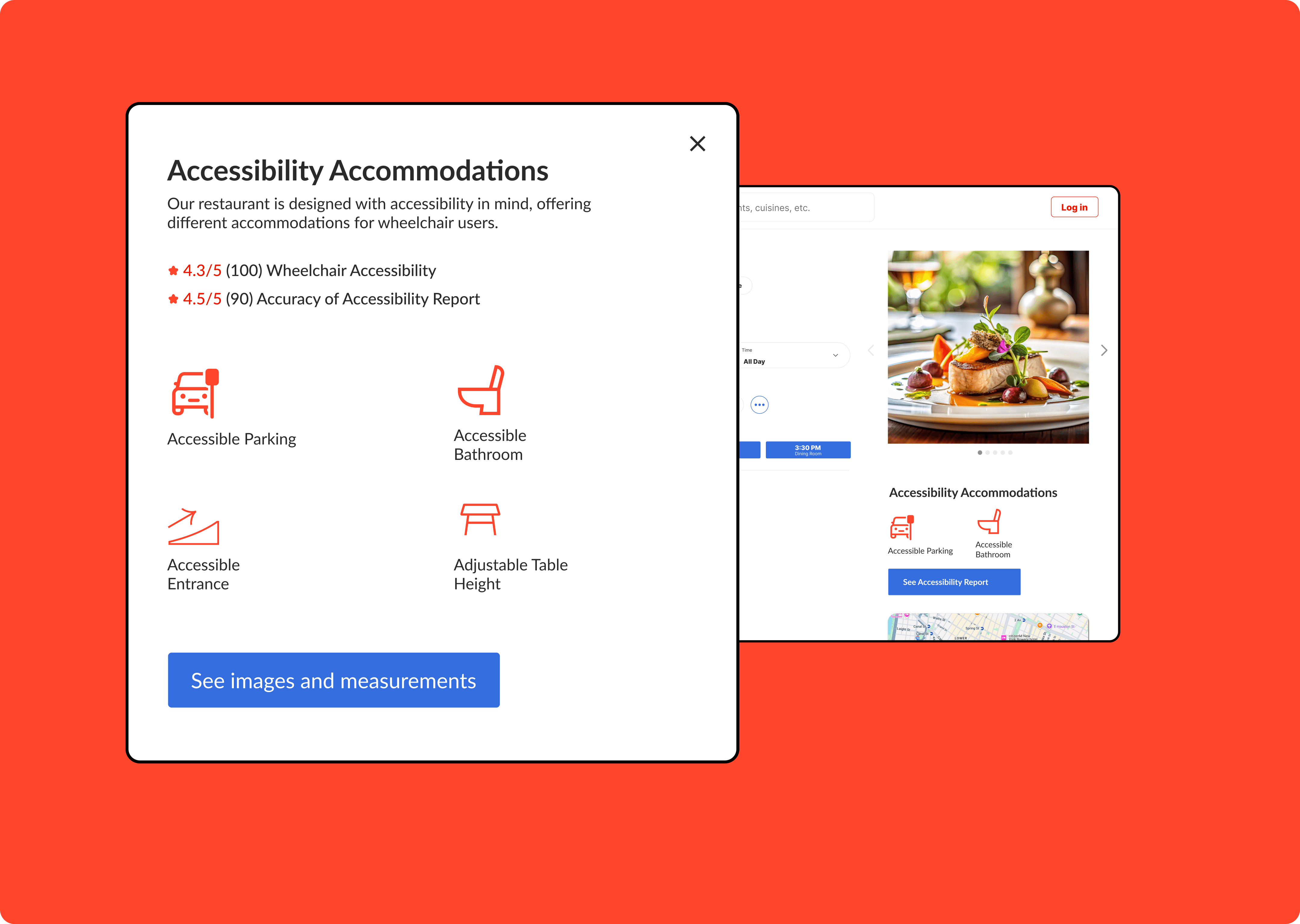
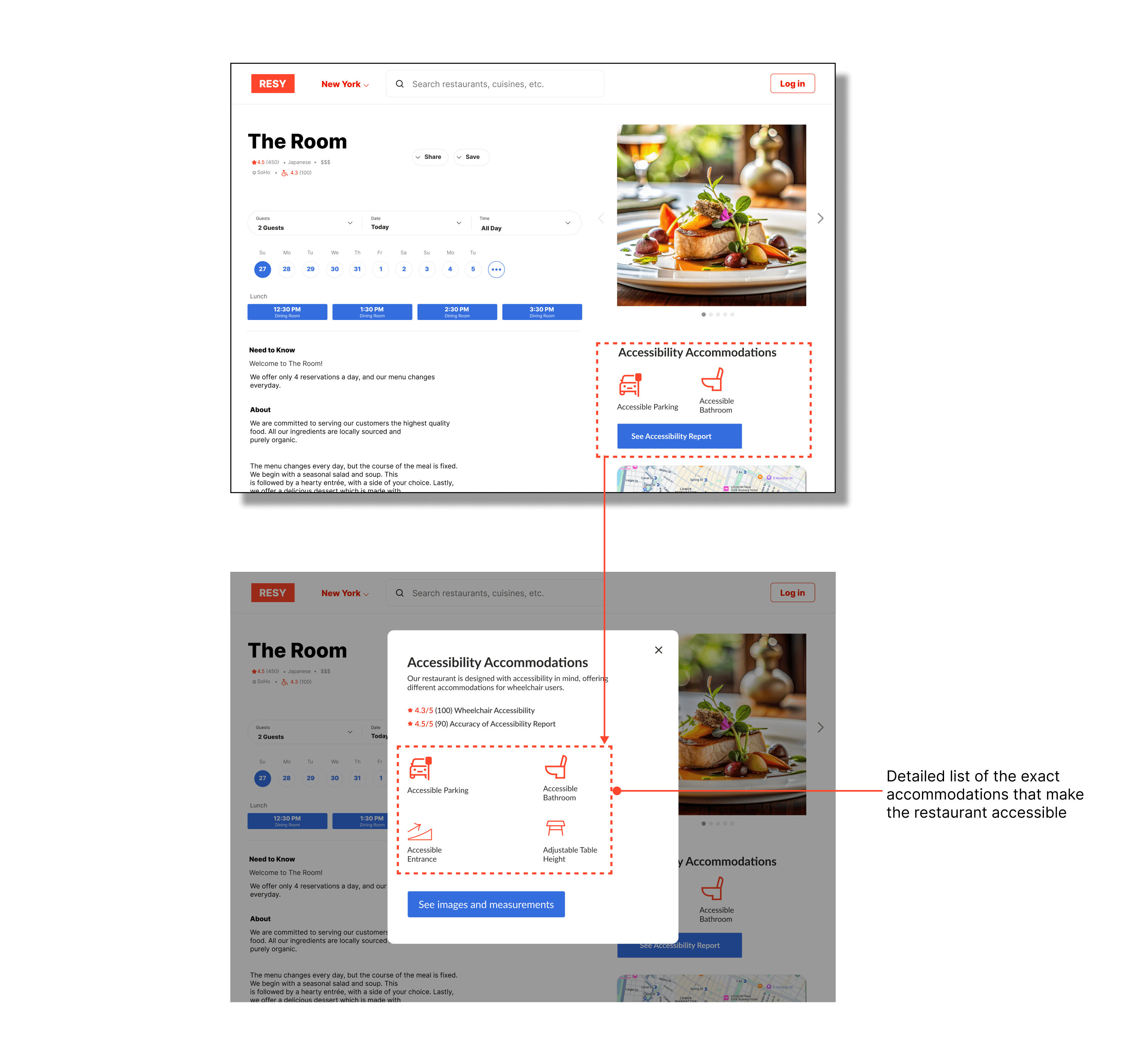
We designed a feature wherein users can look into the specific accessibility accommodations that made the restaurant classify itself as accessible
This provides users with a list that they can access once they click into the page of a specific restaurant. This enables users to understand why the restaurant is considered accessible and whether it lists out the accessibility accommodations they need
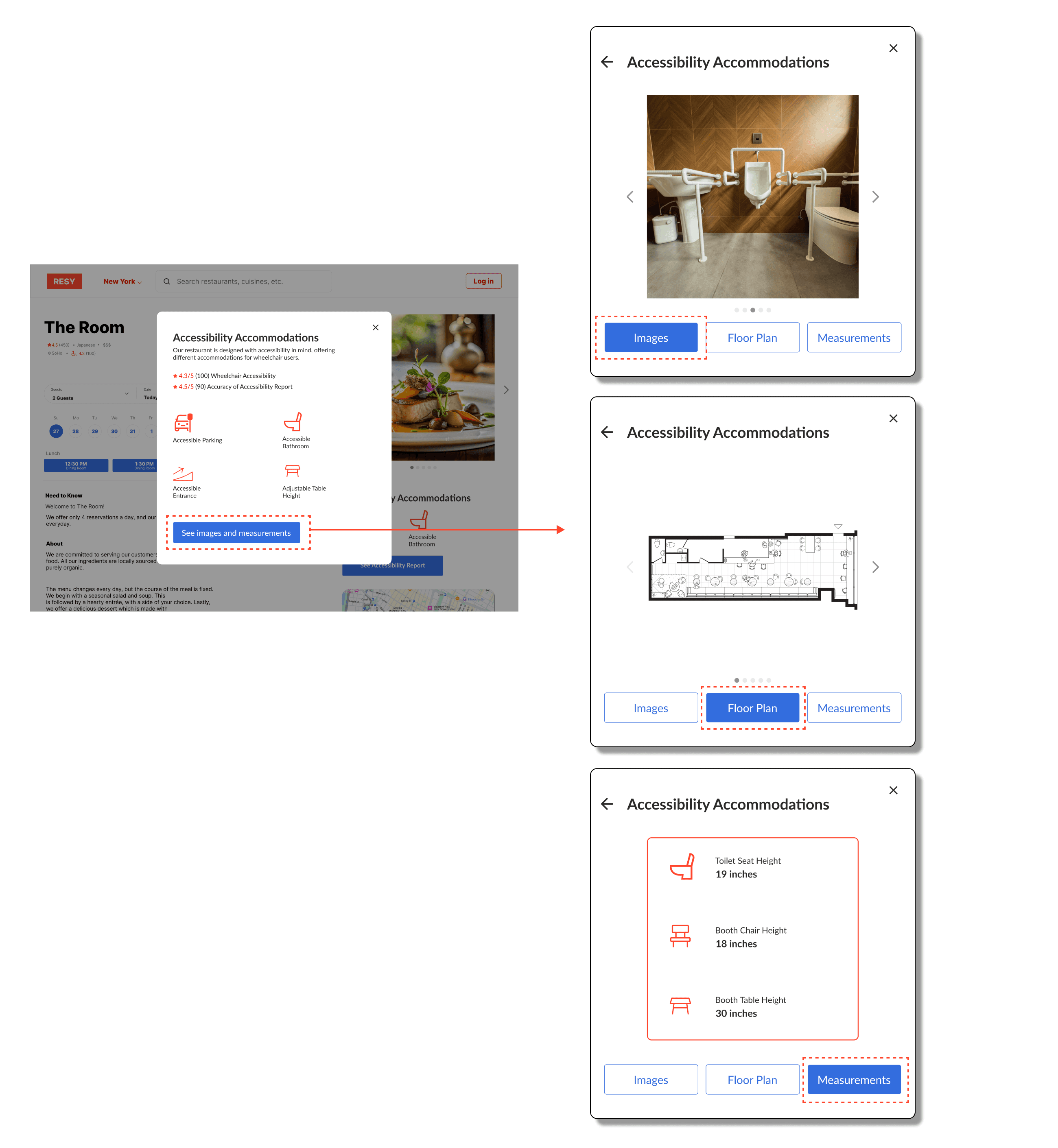
The list isn't enough, and users require specific details such as the images and measurements. Accessibility isn't a one size fits all, so we include a gallery with detailed metrics
The inclusion of images and measurements is a way to ensure that users can look at the accommodations and determine if they work for them.
For example, some wheelchairs might require a higher table height to fit under a table, and some wheelchairs might need a wider aisle width. The specific measurements helps wheelchair users make a more informed decision.
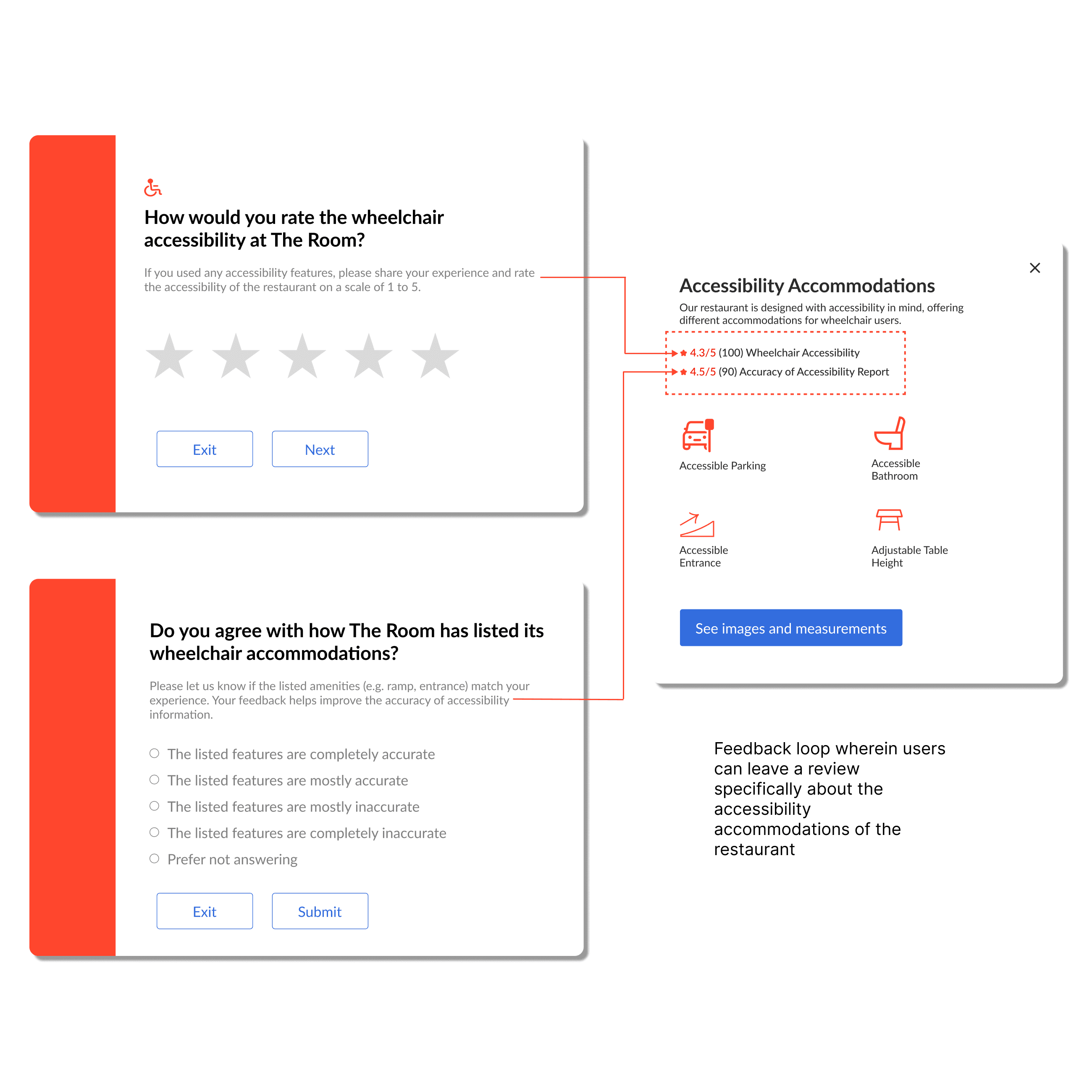
Closing the feedback loop is crucial and so we propose a rating system wherein users can share their feedback on the restaurant's accessibility accommodations
The feedback helps others customers, as well as the restaurant
I proposed a survey with 2 key questions
The first question is for users to leave an overall rating of wheelchair accessibility at the restaurant.
We also asked users to provide feedback on the way the restaurant lists their accessibility accommodations on Resy's website. If a user looked at the accessibility details on Resy before visiting the restaurant, it would be helpful to know if their experience did in fact match what was listed on the website. This also helps restaurants determine how they can better list their details on Resy.
My Takeaways
I would love the opportunity to redesign Resy from the business's user perspective, and explore how restaurants can list out their business on Resy and cater to wheelchair users. Exploring the other perspective of the design and see how restaurants can list out their accessibility information would be a great way to explore constraints and opportunities from the overall design space. It would be great to explore these nuances.
This project taught me a lot about working with the concept of accessibility in digital and physical spaces. While redesigning Resy was a digital project, observing restaurants in-person, interacting with wheelchair users and understanding accessibility in physical spaces was deeply important. It certainly shaped my practice in translating this work onto a digital interface.
While exploring wheelchair accessibility was a great avenue, we would love to expand the scope and definition of accessibility, and account for other kinds of needs. For example, thinking about other measures such as Braille menus and catering to larger definitions of accessibility would be an area to explore.
Being able to conduct usability testing with individuals who don’t use a wheelchair was a but limiting. It would be great to gather feedback on our designs from wheelchair users directly, and hopefully that is something we can pursue. While limiting, this also taught us how to work with time constraints and push out designs quickly when needed.
Copyright © 2026 Krishna Kishore Lal